

Excipient Industry: A Chemical Behind Every Dose We Take
Introduction
Ever wondered what actually constitutes the medicine we consume? Well, the drug itself is just a tiny fraction of what's in those tablets. The real stars? A bunch of unassuming white powders called excipients making upto 80-90% of the final product. Without them, our medicine wouldn't even dissolve or taste decent, or might even fall apart.
In a way, these excipients are unsung heroes of the pharmaceutical world. They're not the active drugs that actually cure us, but they hold everything together, help the medicine get absorbed in our body, while making sure the pill survives its journey from factory shelf to our stomach. From simple starch derivatives that make tablets burst open in water to cellulose powders that give them strength, excipients are everywhere in pills, capsules, and even injectables.
What are these excipients actually made from?
At their core, most come from simple, everyday natural stuff you might recognise—like plants, wood, or potatoes. They are, however, tweaked in factories with some chemistry to make them perfect for pills.
Take starch-based ones like Blowtab (sodium starch glycolate). It starts with plain old corn or potato starch, which gets treated with chemicals like sodium monochloroacetate (SMCA), a raw chemical made from vinegar acid, plus chlorine and sodium. They are then added to special groups that make it swell up like a sponge in water, which makes our tablet disintegrate fast.
Then, we have the cellulose family, which includes:
Hindcell (microcrystalline cellulose)- A purified wood pulp or cotton linters broken down into tiny particles.
Rheollose (sodium CMC)- It takes the cellulose and neutralises it with sodium for a water-soluble thickener after reacting it with SMCA discussed above.
Disolwell (croscarmellose sodium)- IT is a sodium CMC that's cross-linked to make it super-swelly but not fully soluble.
Swellcal (calcium CMC): This component swaps sodium for calcium for even tougher tablets.
In a nutshell, these ingredients aren't some fancy lab inventions. Consider them as nature's building blocks upgraded for pharma precision, making them cheap and scalable.
How These Excipients Work in Our Pills
Let us now understand the working of the medicine pills we take. Picture a tablet as a tiny team effort, where excipients make sure everything runs smoothly.
When we swallow a pill, water hits it first. Swelling types like Blowtab and Disolwell act like sponges—they suck up liquid fast and burst the tablet open. This lets the medicine dissolve quickly and get absorbed. Without them, our painkillers might not even dissolve, staying hard.
Then fillers and binders like Hindcell and Rheolose step in. They give the pill shape and strength so it doesn't crumble in the bottle, but also control the pace—fast break for quick relief or slow drip for all-day coverage. It's like building a smart delivery truck that unloads the drug right where our body needs it. Simple tweaks in the recipe, big difference in how medicine works for us.
Global Excipients Industry Overview
As more generic drugs flood the market, the demand for excipients rises since they make up around 80%-90% of a pill’s weight.
Currently, the global excipients market is valued at $9.3b in 2025, and is expected to hit $12.3b in 2030 with a 5.8% CAGR—faster than many chemical sectors, and way steadier than volatile APIs.
Here's why smart money's piling in:
Generic Boom: Patent cliffs on drugs like Humira mean generics need massive excipient volumes. This alone drives 40%+ of growth.
Biologics Surge: Fancy injectables and cell therapies crave ultra-pure versions—biopharma excipients alone jump from $3B to $6.3B by 2035 (6.6% CAGR).
Tough Drugs Need Help: 40% of new meds barely dissolve in water, so solubility boosters like lipid excipients are hot (up to 350x bioavailability boost).
Quick Global Snapshot:
Region | 2024 Market Share | Growth Edge |
North America | 38% ($3.15B) | R&D hub, Ashland/DuPont |
Europe | ~25% ($2.35B) | Roquette/BASF leaders |
Asia-Pacific | 20%+ (fastest) | 6.5% CAGR, India/China manufacturing |
Currently, North America leads with around 38% share ($3+ billion), home to giants like Ashland and DuPont. The European region follows with around 25% share, while the Asia-Pacific region, accounting for 20%, is the fastest growing market for the excipient industry. Big moves signal confidence:
Talking about the latest industrial trends, a company called Roquette has bought IFF’s pharma business for expansion. Several international companies like Evonik, Croda, and Colorcon are focusing on high-margins.
India's Excipient Scene: Rising Star in Pharma Supply
India is becoming a major excipient powerhouse. Rather than just copying the pills, it is in fact, outpacing the global averages in terms of growth due to cheap raw material and a generic export boom.
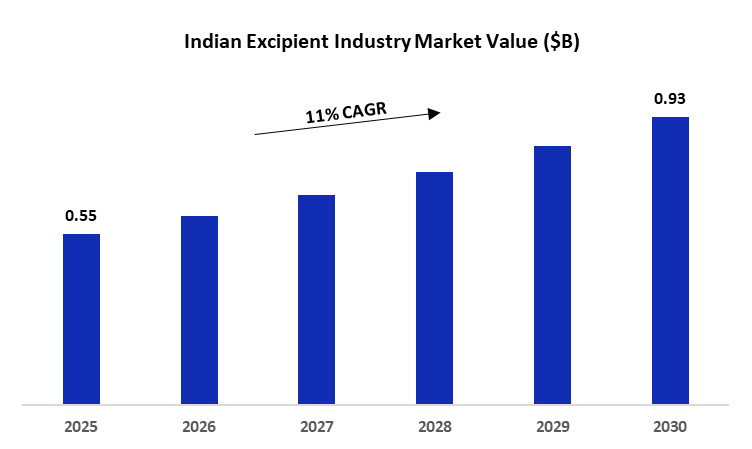
Representing around 5%-7% of the global market value, the Indian excipient industry is currently valued at around $550 million, and is expected to grow with a CAGR of around 10%-12% in the coming years.
India's excipient industry benefits from massive cost advantages—starch from abundant corn and cellulose from wood pulp cost 30-50% less than global averages—combined with a skilled chemical engineering workforce and proximity to the world's largest generic drug manufacturing hub.
Government schemes like PLI and Production Linked Incentives are pouring ₹15,000+ crore into API/excipient manufacturing, aiming to cut China import dependence from 70% to under 30% by 2030. India is currently positioned to capture 15-20% global market share within the decade.
India isn't just copying pills anymore—it's becoming a major excipient powerhouse. The domestic market is worth around $500-700 million right now and growing at 10-12% yearly, outpacing global averages thanks to cheap raw materials, skilled chemists, and booming generic exports. With 20% of the world's generics coming from here, excipient demand is exploding.
Key Drivers:
Export Muscle: India ships excipients to 100+ countries; companies like Gangwal, Spectrum Pharma, and Megafine supply big brands worldwide.
Government Push: PLI schemes and "Make in India" pour billions into API/excipient manufacturing to cut China imports.
Cost Edge: Labour and starch/cellulose at 30-50% lower costs make Indian products unbeatable for volume basics like SSG and MCC.
Quick India Snapshot:
Hub | Key Players | Strength |
Gujarat | Patel Chem, Megafine | Disintegrants, cellulose |
Maharashtra | Anshul Group, Supriya Lifescience | Specialty polymers |
Hyderabad | MSN Labs | Export-focused |
Local stars like Patel Chem (making Blowtab, Hindcell) are building strong brands in generics, and big global names like Roquette are opening factories here too. Keeping quality steady and complying with strict regulations are the key challenges faced by Indian players. However, more Indian plants are getting USFDA approval every year. If the trend holds, India is expected to grab 15-20% of the global excipient market by 2030.
Government Push: India's Excipient Ambition Takes Shape
In order to cut the reliance on Chinese imports and to capture the global market, the Indian government has taken considerable initiatives to tell India’s excipient story.
Key Initiatives:
Production Linked Incentive (PLI) Scheme tops the list. It offers cash incentives to pharma and chemical makers who hit production targets for APIs and excipients, making local manufacturing competitive against imports. Excipient makers can grab bonuses for scaling output, especially for high-margin products like solubility boosters and speciality polymers.
Make in India Campaign pushes domestic capacity with the goal of building plants, creating jobs, and stop bleeding of foreign exchange on imports. Excipients fall squarely in this push, with state governments offering land and tax breaks to set up facilities.
Quality & Certification Push: The USFDA approvals for Indian excipient plants have jumped in recent years—the government funds training, quality audits, and regulatory consulting to help small and mid-size players meet global standards. More approvals mean bigger export orders.
R&D Support through schemes like CSIR and DSIR funding helps companies develop novel excipients—green cellulose, plant-based binders, solubility tech—keeping India ahead of cheap copycat competitors.
India's excipient makers are focusing on turning a commodity into an established and highly valued industry. They're focusing on getting the backing to innovate, scale, and go global.
India's Excipient Champions: Who's Leading the Charge
One or two giants don't dominate India's excipient scene—it's a mix of established players, smart mid-size operators, and scrappy innovators all fighting for share. Here are some of the major players in the Indian excipient industry.
Patel Chem Specialities, where Venture X is invested in, is one of the most recognised excipient players in India. Based in Ahmedabad, they've built branded excipients like Blowtab (sodium starch glycolate), Hindcell (microcrystalline cellulose), Rheollose (sodium CMC), Disolwell (croscarmellose sodium), and Swellcal (calcium CMC). Their strategy remains focused on high-quality & assured pharma-grade versions of common excipients with strong technical support. They export globally and are a go-to for tablet makers.
The company’s primary growth strategy is to establish a new manufacturing facility at Indrad, Mehsana, with a capital expenditure of ₹43.15 crore from the IPO proceeds. This facility will specialise in high-demand speciality excipients: Croscarmellose Sodium (CCS), Sodium Starch Glycolate (SSG), and Calcium Carboxymethyl Cellulose (CMC). The new plant is expected to be commercialised by March 2026 and will add 6,012 MTPA to its total installed capacity, bringing total capacity from 3,720 MTPA to 9,732 MTPA.
Apart from that, the company is already exporting to over 15 countries, including the USA, Germany, UK, Japan, China, and Australia and plans to strengthen its international presence by building stronger distribution networks, advancing R&D to address diverse market needs, and exploring opportunities in new and emerging regions.
The company is positioned to capitalise on the growing demand for speciality excipients in pharmaceuticals, nutraceuticals, and food industries while maintaining its strong margins through value-added product focus.
Accent Microcell- Where Venture X is invested in, specialises in microcrystalline cellulose (MCC) and cellulose-based excipients. They're known for consistent particle size, flow properties, and purity—critical for tablet compression. Their MCC grades serve both the pharma and food industries, and they've built a solid reputation for reliability among domestic and export customers.
The company is moving towards a value-led speciality excipients and prioritising high-margin products like CMC. On the international front, Accent is securing regulatory approvals, particularly EXCiPACT certification for Europe, which will progressively scale its international presence in American and European markets.
Beyond capacity, they're investing in advanced manufacturing technologies, process optimisation, and product innovation to develop customised solutions across diverse industries. Their strategic blueprint emphasises expanding into new sectors—cosmetics, personal care, beverages, e-cigarettes, textiles, leather, and dairy—while targeting key customer segments including pharma companies, nutraceutical firms, generic drug manufacturers, and CDMOs/CMOs.
Apart from that, there are also other emerging players in the Indian market, such as:
Gangwal Chemicals specialises in cost-competitive cellulose derivatives and disintegrants for India's generic drug makers. With solid USFDA approvals, they thrive on volume and operational efficiency in commodity segments. Challenge: margin compression from Chinese competition; opportunity lies in diversifying into speciality products.
Megafine Speciality Chemicals produces starch derivatives, CMC, and MCC for both pharma and food industries, positioning themselves as the reliable mid-tier option. Known for consistent quality and reasonable pricing, they serve small to mid-sized formulators. Their growth strategy is organic—steady expansion while reducing pharma concentration risk through food sector diversification.
Spectrum Pharma focuses on speciality polymers and modified-release excipients (enteric coatings, sustained-release binders) commanding 3-5x margin premiums. Export-focused with multinational pharma relationships, they benefit from the global shift toward modified-release formulations. Risk: innovation dependence; opportunity: rising demand for complex, customised excipients.
Supriya Lifescience is the smallest but most specialised player, focusing on lipid-based excipients and bioavailability enhancers for hard-to-dissolve drugs. High margins (20%+) but limited scale. Strategy: build R&D credibility and secure regulatory approvals to capture the fast-growing bioavailability enhancement segment.
Most Indian players stick to volume basics (MCC, starch derivatives) where margins are tight but volumes are huge. A few, like Patel Chem and Accent Microcell, have built solid reputations for quality. The real growth happens when smaller players get USFDA approval and start exporting—that's where the real money is.
Talking about the foreign market, players like Roquette and BASF have set up or expanded Indian operations to leverage low-cost raw materials, skilled labour, and proximity to Asia-Pacific pharma hubs. These MNCs serve both local Indian demand and export to regulated markets, bringing global R&D, quality standards, and brand credibility while pressuring local players to match their scale, technology, and compliance capabilities.
Threats and Challenges for the Excipient Industry
Till now, we have been talking about the positive side of the excipient industry. However, when it comes to threats and challenges, here are some of the major points that must be kept in mind before investing in this sector.
Raw Material Scarcity and Supply Chain Vulnerability:
The excipient industry faces a critical structural constraint: limited domestic availability of key raw materials, particularly wood pulp for cellulose-based excipients. This forces heavy dependence on global supply chains, exposing manufacturers to geopolitical volatility, currency fluctuations, and logistics disruptions. China and Southeast Asia dominate pulp supply, creating concentration risk. Any trade tensions, tariffs, or supply shocks directly inflate input costs and compress margins for manufacturers who lack long-term contracts or strategic inventories.
Intense Price Competition in Commodity Segments:
The bulk of excipient volume—basic MCC, starch derivatives, disintegrants—remains commoditised with razor-thin margins. Indian and Chinese manufacturers compete aggressively on cost, undercutting Western suppliers. While this benefits generic drug makers, it creates a race-to-the-bottom dynamic where only scale players with the lowest-cost operations survive. Mid-market players like Accent must constantly balance volume growth with margin preservation, a tightrope that squeezes profitability.
Stringent Regulatory Barriers:
Novel excipients face lengthy approval timelines—USP, EP, and FDA certifications require comprehensive safety dossiers, clinical data, and manufacturing compliance audits. This delays time-to-market for innovative products and inflates R&D costs, favouring established players with existing certifications. Smaller manufacturers struggle to fund these compliance investments, limiting their ability to innovate and capture premium segments.
Customer Concentration and Long-Term Contract Lock-In:
Large pharma and generic drug makers wield significant bargaining power, demanding volume discounts and multi-year supply agreements with fixed pricing. This locks excipient suppliers into low-margin, capital-intensive operations with limited pricing flexibility. Loss of a major customer can devastate smaller players; conversely, dependence on a few large accounts creates revenue volatility and strategic vulnerability.
Geopolitical and Trade Uncertainties:
Rising protectionism, tariffs on chemical imports, and shifting trade dynamics—particularly U.S.-China tensions—threaten supply chain stability and increase input costs. Export-dependent Indian excipient makers face headwinds from new tariffs or trade restrictions. Additionally, shifting manufacturing policies in the U.S. and Europe could favour domestic producers, squeezing import-reliant suppliers.
Sustainability and Green Chemistry Transition Costs:
Regulatory pressure for eco-friendly, biodegradable excipients is accelerating. Companies must invest heavily in R&D for plant-based alternatives and sustainable manufacturing processes—capex-intensive shifts that favour large, well-capitalised players. Smaller manufacturers risk obsolescence if they fail to pivot toward green chemistry fast enough.
Technology Disruption and Alternative Formulations:
Advances in drug delivery technologies—amorphous solid dispersions, lipid-based formulations, novel polymers—are shifting demand away from traditional excipients. Players slow to innovate risk losing market share to companies developing next-generation solutions. R&D intensity is rising, favouring well-funded competitors over cost-focused players.
Conclusion: The Excipient Industry at a Crossroads
The pharmaceutical excipient industry is positioned for strong growth—valued at $9.3-11 billion in 2025 and projected to reach $15-19 billion by 2034 at a 5-8% CAGR—driven by patent cliffs, biopharmaceutical demand, and rising solubility challenges in 40% of new medicines. India is emerging as a key manufacturing hub at 10-12% annual growth, with companies like Patel Chem and Accent Microcell building branded portfolios and capturing global export share.
However, structural challenges will reshape the competitive landscape. Raw material scarcity, margin compression in commodities, stringent regulatory barriers, and intense customer bargaining power create a tough operating environment. Winners will be those shifting into high-margin speciality excipients, diversifying beyond pharma, securing global certifications, and investing in green chemistry and advanced manufacturing.
For investors and manufacturers, excipients remain under-appreciated—low glamour but resilient, essential to pharma supply chains, and increasingly consolidated among well-capitalised global players. The next five years will determine which regional manufacturers survive consolidation and which graduate to genuine global status.
0

27

0
Share On


Table Of Content
Introduction
Global Excipients Industry Overview
Government Push: India's Excipient Ambition Takes Shape
Threats and Challenges for the Excipient Industry
Conclusion: The Excipient Industry at a Crossroads
Tags


